Winter storage time again. When the winter season approaches with thoughts of snow in many parts of the country, it’s time to know how to properly store your RV.
How to Winterize RV
Question: Can you help me on how to winterize our RV? I would like to know the steps involved, how to handle the washing machine, water heater, etc.
Answer:
Here are a few items you will need to have. These items can be found in most RV parts stores:
- Non-toxic RV antifreeze (the amount depends on the layout and length of your plumbing lines. 2 to 3 gallons will normally do).
- A water heater by-pass kit, if not already installed.
- A wand to clean out holding tanks.
- A water pump converter kit, or tubing to connect to the inlet side of the water pump.
- Basic hand tools to remove drain plugs.
Here are the steps to winterize the RV water system to protect it from freezing. Be sure to read your owner’s manuals for unit specific winterizing guidelines. Follow the steps below that apply to your RV.
- If you have any inline water filters remove and bypass before starting.
- Drain the fresh water holding tank.
- Drain and flush the gray and black holding tanks. Clean the black tank with a wand. Lubricate the termination valves.
- Drain the water heater. Open the pressure relief valve and remove the drain plug. CAUTION (never drain the water heater when it is hot or under pressure).
- Open all hot and cold faucets; don’t forget the toilet valve and outside shower.
- Locate and open low point drain lines. Using the water pump will help force water out, but turn it off as soon as the system is drained.
- Recap all drains and close all faucets.
- By-pass the water heater. If you do not have a by-pass kit installed the water heater will fill up with antifreeze before it goes through the water lines, wasting six gallons of antifreeze.
- Install a water pump converter kit, or disconnect the inlet side of the pump (the line coming from the fresh water holding tank) and connect tubing from the pump into a gallon of RV antifreeze.
- Turn the water pump on and pressurize the system. Starting with the closest faucet slowly open the hot and then cold valves until antifreeze appears. Replace antifreeze jug as required.
- Repeat on all faucets from the closest to farthest away. Don’t forget the outside shower.
- Flush the toilet until antifreeze appears.
- Turn the water pump off and open a faucet to release the pressure. Go to the city water inlet. Remove the small screen over the inlet and push in on the valve with a small screwdriver until you see antifreeze. Replace the screen.
- Pour a cupful of antifreeze down each drain. Pour a couple of cups in the toilet and flush into the holding tank.
- If your water heater has an electric heating element turn it off. This will protect the element if the unit is plugged in while being stored.
- Make sure all faucets are closed.
- Consult your owner manuals for winterizing icemakers and washing machines.
- The unit is winterized.
RV Winter Storage Step by Step
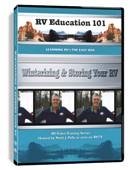
If you would like to actually see how to winterize your RV, we recommend the DVD about Winter Storage and Winterizing. And we also are happy to share the following additional tips from Mark Polk, producer of the educational videos.
Many RVers know to winterize their RV to avoid problems with it the following Spring, but may not think about preparing the RV for several months of storage. The storing portion is just as important as winterizing the water system.
Actually, winterizing your RV encompasses much more than protecting the water system from freezing temperatures. It’s just that we’re under the impression that winterizing means to put that pink non-toxic antifreeze through our water system and everything will be okay.
 |
Here is an excerpt from the Original Checklists for RVers:
It’s important to consider things like batteries, ventilation, the condition of sealants, mice, and fuel system protection just to mention a few. Here are some things we should do in addition to winterizing our RV water system. The storage procedures are divided into two sections, the coach storage and the chassis storage. Follow the steps below that apply to your RV. |
Winter RV Storage Part 1 (Coach Storage):
- Store your unit under a covered area if possible. If not, avoid parking under trees or in areas where grass and weeds will grow.
- If you choose to buy a cover for the RV, be sure it is made of a breathable material. This will help in preventing mold and mildew.
- Chock the wheels front and rear. Leave the parking brake off. If you’re storing a Pop Up angle the tongue downward to assist in snow and water run off.
- Inflate the tires to the manufacturer’s recommended max cold pressure. Cover the tires to protect them from the harmful ultraviolet rays. Place something between the tires and the ground. Make sure whatever you use is larger than the actual foot print of the tire.
- If you do not remove the tires for long-term winter storage, periodically move the vehicle to prevent flat spots on the tires.
- Close all of the window blinds to avoid sun exposure to the carpet, drapes and upholstery.
- Wash the exterior of the unit and clean the interior thoroughly prior to winter storage.
- Make sure the awning fabric is clean and dry before storing.
- On a Pop-Up camper, make absolutely sure the fabric is clean and dry before storing. This is a good time to check for tears, and repair the fabric.
- Inspect all roof seams, body seams and window sealant for cracks and openings. Water can get in the smallest openings so really inspect all sealants. Consult your dealer for sealants compatible with these materials.
- Service all locks with a graphite spray lubricant. Lubricate all hinges and moving parts with WD 40.
- Turn all LP gas appliances off. Turn the main LP gas supply valve off. If you’re storing a Pop Up or Travel Trailer, make sure the LP gas regulator is covered.
- Remove the fuse for the LP gas leak detector while the unit is in winter storage. This will prevent the batteries from discharging. Don’t forget to replace it next spring.
- Insects are attracted to the odorant that is added to LP gas. To prevent mud daubers and wasps from building nests in and around your gas appliances, cover the refrigerator vent, the furnace vent and the water heater vent.
- Inspect the underside of the unit thoroughly. Look for anywhere that mice or other rodents can get it, and seal as necessary.
- Strategically place mouse and ant traps in and around the unit. Avoid using mouse poison inside the RV. Many RVers recommend using dryer sheets like Bounce to keep mice out.
- Remove all perishables and anything that can freeze.
- Leave doors, drawers and cabinets open.
- Remove all consumables that would attract mice and other rodents.
- Defrost the freezer compartment and clean the refrigerator. Leave the refrigerator doors open and place some baking soda inside to absorb odors.
- Clean the air conditioner filters, and cover the air conditioner.
- Turn off the main breaker and unplug all appliances.
- Remove dry cell batteries in clocks, flashlights and other items.
- The use of Maxx Air products will provide the airflow and ventilation required during winter storage while keeping the elements out.
Winter RV Storage Part 2 (Chassis Storage):
To start with if you put your RV in winter storage it’s a good idea to remove the batteries and put them in storage too. This is quite simple to do. When you’re removing the batteries always remember to remove the negative terminal first. Clean the batteries with a 50/50 mixture of baking soda and water if necessary. Store the batteries in a cool dry place but not where they could freeze. Batteries in storage will loose their charge. Check the state of charge every month and charge batteries that are at or below 80% state of charge.
- Check and fill the water levels in all batteries that are not maintenance free. Check the electrolyte level and add distilled water if necessary.
- Charge all batteries as required. A discharged or partially charged battery will freeze much faster than a charged battery.
- Remove and clean all battery terminals and posts. Spray the terminals with terminal dressing to protect against corrosion.
- If you plan to start the unit while in storage, and to periodically plug the unit into shore power leave the batteries in the unit. Plugging it into shore power once a month for about eight hours will keep the coach batteries topped off.
- If you put the unit in long-term winter storage; remove and store the batteries where they will not freeze. In either case keep the batteries charged.
- During short-term storage, start the unit monthly and run it with the dash air on for at least 30 minutes.
- If you don’t plan on starting the unit, or won’t be able to start it, buy some fogging oil from a marine supply store to protect the cylinder walls. When the unit is parked where it will be stored, spray the fogging oil into the engine intake downstream from the air filter with the engine at an idle. Complete the same steps on the generator. Follow the manufacturer’s directions. DO NOT USE THIS PRODUCT IN A DIESEL ENGINE .
|
 |
Now your RV is truly winterized and ready for winter storage. Hopefully you won’t experience any problems when you perform your spring maintenance checks next year.
Excerpt from Original Checklists for RVers reprinted with permission from RV Education 101.
Think about how much your RV dealer or a service center might charge to winterize your RV. And have you ever had a chance to take an RV trip, but turned down the opportunity because you didn’t want to pay to have it done again? Do you know what to do to put the RV in storage until next spring? This DVD provides the step-by-step instructions for how to safely do all of this yourself.
With this “Winterizing and Storing your RV” video/DVD you will no longer have to pay to have your RV prepared for cold weather or cancel trips because the RV is already set for hibernation.
Anybody can easily prep and store their RV by following the simple step-by-step hands on instruction. Mark Polk, the host of this video, demonstrates the easiest and most effective way to go through the process.
First he explains how an RV water system works. He demonstrates how to install a water heater bypass kit to save six gallons of antifreeze, and walks you through the steps on how to evacuate all of the water from the RV. With that done, you are shown how easy it is to add the non-toxic antifreeze to the water system. Armed with the right instruction, you will see just how simple it really is. And once you have a properly winterized rig, there is no need to worry about expensive repairs next spring when you take it out of storage. Polk explains that a frozen water heater tank that bursts can add up to a $500 repair bill.
These steps protect the RVs water system, but what about the tires, batteries, generator and other components? All of these could be damaged if they are not properly prepared for short or long term storage. Polk breaks the RV into two separate categories, the chassis and the coach, and walks you through every step required to protect your investment while it is stored. He discusses the “do’s and don’ts” about storing batteries, tires, how to protect the interior and exterior of the RV, fuel preservatives, roof maintenance, sealants, ventilation and much, much more. Along with the video you will receive a printed checklist to use so you won’t miss any steps.
The cost of this lesson is nothing compared to the hundreds of dollars it can save you when you know what steps to take to protect your RVs water system and other major components.
Now available on Amazon: Winter Storage and Winterizing DVD
Should You Pull Your Slide Out When Winterizing Your RV?
Question: Is it better to pull your slide outs in for the winter or can you leave them out? In our case, the trailer is parked on a permanent site.
Answer: It is really up to you. If you are using the trailer in winter, then you will probably have heat and water running and will want the space. Even then, you may want to pull them in for extremely cold weather or icing to help retain warmth. But this is a judgment call, since if things ice up in the closed position, you may want to wait to open the slides again until you know things have thawed out.
If the trailer is sitting empty, we would be inclined to close the slides because there is no reason for them to be open. We figure it would be one less roof that could leak, or otherwise have problems.
Summer RV Storage
Question: I will be storing an RV in summer in Florida. What do I need to do in the interior of a class A coach to protect it from mold and or bugs? Kitty litter and charcoal have been mentioned and some consumable cans that deter bugs or…..any other thoughts?? The RV will be in Florida for the summer and re-entered in November.
Answer:
I will tell you what we did last year when we stored our RV in Florida from mid-April to the end of August.
Like you, we were also concerned about mold and bugs. For bugs, since we were mostly concerned with ants, we used a good quality ant killer (in powder form) placed around the periphery of our coach. Inside we placed multiple ant traps in all the sections especially around counter tops, corners and anywhere we had ever seen ants.
As part of the bug initiative, we left no food in the RV that might attract bugs. We started food diminishment weeks and maybe months in advance by using up our food supplies and getting rid of everything else. We might have kept a few cans of food that we felt would be okay.
As for mold we were concerned about condensation, which leads to mold and mildew. To that end bought several disposable containers of DampRid and placed them in a few of our cupboards that had clothing in them, and left the cupboard doors open. We also placed two hang-up DampRid pouches in our hanging clothes closet.
We covered all our furniture and counter/table surfaces with old sheets just in case dust got in. We closed all of our vents and windows and shades and hoped for the best. We were pleasantly surprised that when we got back to our coach and found no evidence of bugs or mold or mildew.
By the way, we made a conscience decision to store our rig in a place where we would not be parked on sand or grass. We found a secure storage facility where we were parked on gravel surrounded by concrete, which proved to be a good choice.
Hope your experience is as good as mine.
If anyone has other suggestions, please share your comments.

Jill Miller is the founder of Your RV Lifestyle. Trading corporate America for the open road, Jill, along with her partner Jose, began their RV journey, making an unconventional start by wintering in New Jersey. A natural adventurer, she was motivated by a desire to explore the USA and beyond, embracing the varied landscapes, communities, and cultures across the country.
For Jill, the allure of RV living was not about material accumulation, but rather the pursuit of an adventurous, fulfilling lifestyle. A lover of golf, bicycling, hiking, and line dancing, she has carried her passions across the country, engaging with them in diverse settings. Jill’s commitment to the RV lifestyle came after years of careful research, numerous consultations with RV owners, and personal trials, including living in a rental RV.